Plantation Shutters vs Venetian Blinds UK: Which Is Better for Your Home?
When you're deciding how to dress your windows, plantation shutters and venetian blinds are two of the most popular options. Both offer excellent light control and a clean aesthetic, but they work very differently—and the choice between them comes down to your budget, lifestyle, and what you actually want from your windows.
What Are Plantation Shutters?
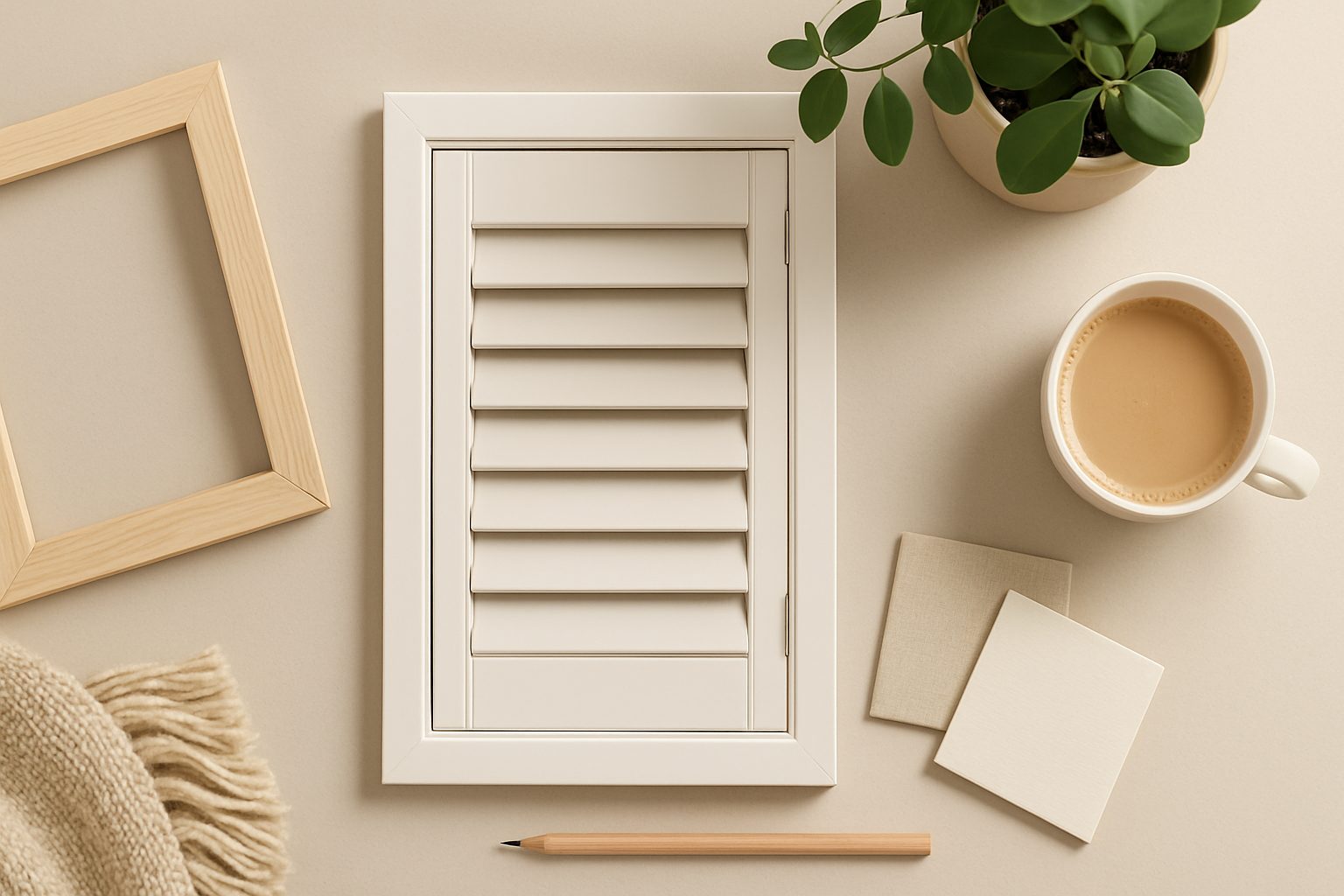
Plantation shutters (or simply "shutters") are hinged panels with horizontal slats, typically 1.5 to 2.5 inches wide, that sit in a frame fitted to your window or door opening. They're installed permanently and operate by opening and closing the louvres to control light and privacy, rather than raising and lowering like blinds.
In the UK, you'll find two main types: hardwood shutters (expensive and stunning but prone to warping in humid kitchens and bathrooms) and MDF shutters (painted or stained, much more affordable, and moisture-resistant). Most British homeowners go for MDF.
What Are Venetian Blinds?
Venetian blinds are horizontal slats suspended by cords or tapes that hang inside or above your window frame. You tilt the slats to control light, and raise or lower the entire blind. They're typically made from aluminium, wood, or faux wood in the UK market.
They're a temporary fixture—you can take them down and rehang them easily, which appeals to renters or anyone who likes flexibility.
Cost Comparison
Plantation shutters: Expect £800–£3,000+ per window for made-to-measure hardwood shutters, or £400–£1,200 per window for MDF. Installation runs another £200–£400 per frame.
Venetian blinds: £100–£600 per window depending on material and size. Installation or DIY is straightforward and costs little to nothing.
For a typical three-bedroom house with ten windows, shutters could run £5,000–£15,000 installed. Venetian blinds would be £1,500–£4,000. If budget is tight, venetian blinds win decisively. MDF shutters offer a middle ground but are still two to three times the cost of decent venetian blinds.
Light Control
Shutters give you the finest granular control. You can tilt the louvres to let in sunlight while blocking direct glare, and you get truly full blackout when closed. They're brilliant for bedrooms where you need complete darkness, or living rooms where you want diffused light without the blind hanging in the middle of the window.
Venetian blinds offer similar tilting control, but they never fully block light around the edges—there's always a thin line of light at the sides and top. Full blackout requires you to raise them completely.
For blackout capability, shutters win. For adjustable, nuanced light control, both perform well.
Style and Aesthetics
Shutters look more substantial and permanent. They add architectural value to a room and are particularly popular in period homes or modern minimalist spaces. They create clean sightlines when open, folding neatly to the sides of the window. They feel premium and custom.
Venetian blinds are more understated. They take up minimal visual space, which suits smaller rooms or where you want the window view to be the focus. They're available in dozens of colours and finishes, so matching your décor is easier. However, when lowered, they do obstruct the window view somewhat.
Neither is objectively "better"—it's about what suits your home's aesthetic and which you prefer to look at daily.
Durability and Maintenance
Shutters are built to last. Well-made MDF shutters should easily outlast the life of most windows—20+ years is typical. They don't degrade from sunlight or need replacing. Maintenance is just wiping down the slats with a cloth; they don't accumulate dust like blinds do.
Venetian blinds have moving parts. The cords or chains can fray or snap, and after 5–10 years of regular use, the mechanism can become loose or unreliable. Dust settles on each slat, so you'll need to wipe or vacuum regularly if you have allergies. When something fails, you usually replace the entire blind rather than repair it.
Durability strongly favours shutters.
Practical Considerations for UK Homes
Moisture is a real issue here. Hardwood shutters can swell or warp in steamy bathrooms or above kitchen sinks. MDF shutters handle humidity much better, though prolonged exposure can still cause problems. Venetian blinds, if metal or faux wood, are completely moisture-resistant.
If you have a wet room, kitchen, or north-facing window that stays damp, venetian blinds or MDF shutters (not hardwood) are the safer choice.
Which Should You Choose?
Choose plantation shutters if:
- You want a long-term investment and plan to stay in your home for many years.
- You value blackout capability and need fine light control.
- Budget isn't your main concern.
- Your windows are in dry rooms (living rooms, bedrooms).
- You prefer a premium, built-in aesthetic.
Choose venetian blinds if:
- You're renting, moving soon, or like flexibility.
- You have a tighter budget.
- You want easy maintenance and fewer moving parts.
- You have moisture-prone rooms.
- You like the ability to change your window treatment without major work.
Both are solid choices. The real decision is whether you value permanence and light control enough to justify the cost, or whether simplicity and flexibility matter more to you. For most UK homes, a combination works well—shutters in bedrooms and living areas, blinds in kitchens and bathrooms.
More options
- MDF Plantation Shutter Panels – Amazon UK (Amazon UK)
- PVC Waterproof Shutter Panels – Amazon UK (Amazon UK)
- DIY Interior Shutter Kit – Amazon UK (Amazon UK)
- Venetian Blinds (Comparison Alternative) – Amazon UK (Amazon UK)
- Shutter Fitting & Measuring Tools Bundle – Amazon UK (Amazon UK)