Plantation Shutters vs Roman Blinds UK: Which Is Right for Your Room?
When you're choosing window coverings for your home, plantation shutters and roman blinds are both popular choices in the UK. But they're quite different in how they look, perform, and what they'll cost you. Understanding the real differences helps you pick the right one for each room.
What You're Actually Getting
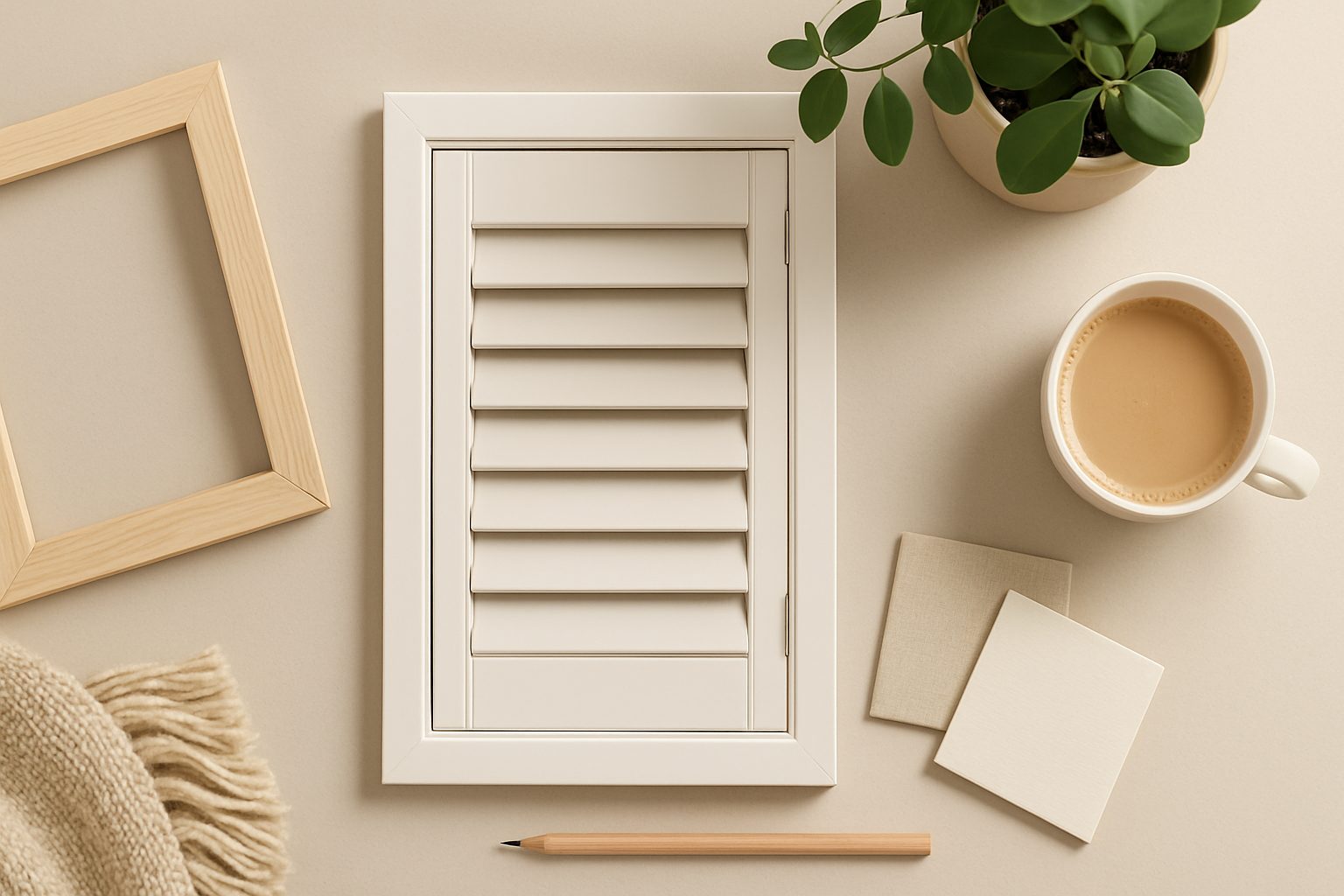
Plantation shutters are solid panels, usually made from vinyl, wood, or composite material, mounted on a frame that hinges to your window frame. You adjust them by tilting the slats to control light and privacy. Roman blinds, meanwhile, are fabric panels that fold up into neat pleats when you pull a cord. They sit either inside or outside your window recess.
The visual difference is obvious: shutters are architectural and structured, blinds are softer and more flexible. But the practical differences matter more.
Cost: The Biggest Factor for Most People
Here's where most people's decision gets made. Roman blinds typically cost £100–£400 per window depending on fabric quality and whether you buy off-the-shelf kits or go made-to-measure. A budget Roman blind kit from a high street retailer might be £80–150.
Plantation shutters cost substantially more. Expect £800–£2,500 per window for quality custom shutters from a specialist installer. That's a significant investment, though shutters do last 15+ years with minimal maintenance, whereas blinds typically need replacing every 7–10 years.
If budget is tight and you're outfitting multiple rooms, roman blinds are the realistic option. If you're in for the long term and want something that adds genuine property value, shutters make more sense financially over two decades.
Insulation and Temperature Control
This is where shutters genuinely outperform blinds. Plantation shutters create an air pocket between the shutter panel and the glass, which helps insulate your room. In winter, they trap warm air; in summer, closed shutters block direct sun and keep heat out. The effect is measurable—you might reduce heat loss through windows by 15–25%.
Roman blinds offer minimal insulation benefit. Heavy thermal-lined versions exist, but they're still essentially fabric, and cold air finds its way around the edges. If you're in a period property with single-glazed windows or you're serious about reducing heating bills, shutters are genuinely worth considering.
Light Control and Privacy
Shutters give you precise control. Tilt the slats halfway and you get dappled light while maintaining privacy. Close them completely and it's blackout. You can adjust different windows independently without affecting the whole room's appearance.
Roman blinds work differently. They either go up or down. You get privacy when fully closed, but for partial light control, you're limited. Some roman blinds have sheer versions, but these sacrifice privacy for light. This matters if you want flexible daytime control without constantly adjusting.
For bedrooms needing blackout capability, shutters are superior. For living rooms where you want ambient light while staying private, it's closer.
Style and Aesthetics
Plantation shutters suit certain interiors brilliantly—they look at home in traditional, modern, coastal, and farmhouse schemes. They're clean-lined and don't date quickly. The downside is they can feel formal or rigid in very casual spaces, and they commit you visually for years.
Roman blinds are more versatile in terms of styling. Thousands of fabric options mean you can match almost any décor, change them seasonally, or swap them out when you fancy a refresh. They work in cottages, contemporary flats, eclectic spaces, and family homes. The trade-off is that fabric choice is a decision you'll revisit regularly, whereas shutters are set and forget.
Maintenance and Durability
Shutters need basic dusting and occasional wiping with a damp cloth. That's genuinely it. They don't fade, don't wear out, don't need replacing. If a slat gets damaged, you might replace just that component.
Roman blinds need more attention. You'll vacuum or brush them regularly to avoid dust buildup, and periodic washing depending on fabric type. After several years, fabric softens and may fade. Cords can fray or break. They're replaceable, but replacement is an expected cost.
Practical Considerations
Shutters require professional fitting (normally £300–600), which adds to the total cost. They take up more physical depth at your window, so they don't work well in very tight window recesses.
Roman blinds are straightforward to fit yourself for most people. You can measure, order, and hang them in an afternoon. They work in any recess depth.
If you rent, shutters are off limits. Blinds are portable—you can take them with you.
Which One, Really?
Choose plantation shutters if you value long-term durability, superior insulation, precise light control, and you're willing to invest upfront. They suit homes where you plan to stay several years.
Choose roman blinds if you rent, budget is a concern, you like changing your décor, or you want quick and easy installation. They're genuinely practical for most UK homes.
Most people don't have to choose just one. Shutters in bedrooms (for blackout and insulation) and roman blinds in living areas (for flexibility and cost-effectiveness) is a sensible hybrid approach.
More options
- MDF Plantation Shutter Panels – Amazon UK (Amazon UK)
- PVC Waterproof Shutter Panels – Amazon UK (Amazon UK)
- DIY Interior Shutter Kit – Amazon UK (Amazon UK)
- Venetian Blinds (Comparison Alternative) – Amazon UK (Amazon UK)
- Shutter Fitting & Measuring Tools Bundle – Amazon UK (Amazon UK)