Louvred vs Solid Panel Shutters UK: Which Should You Choose?
When you're shopping for interior shutters, the choice between louvred and solid panel designs can feel straightforward at first. But each style has distinct practical trade-offs that matter for everyday living. Understanding these differences will help you pick shutters that genuinely suit your room.
What's the difference?
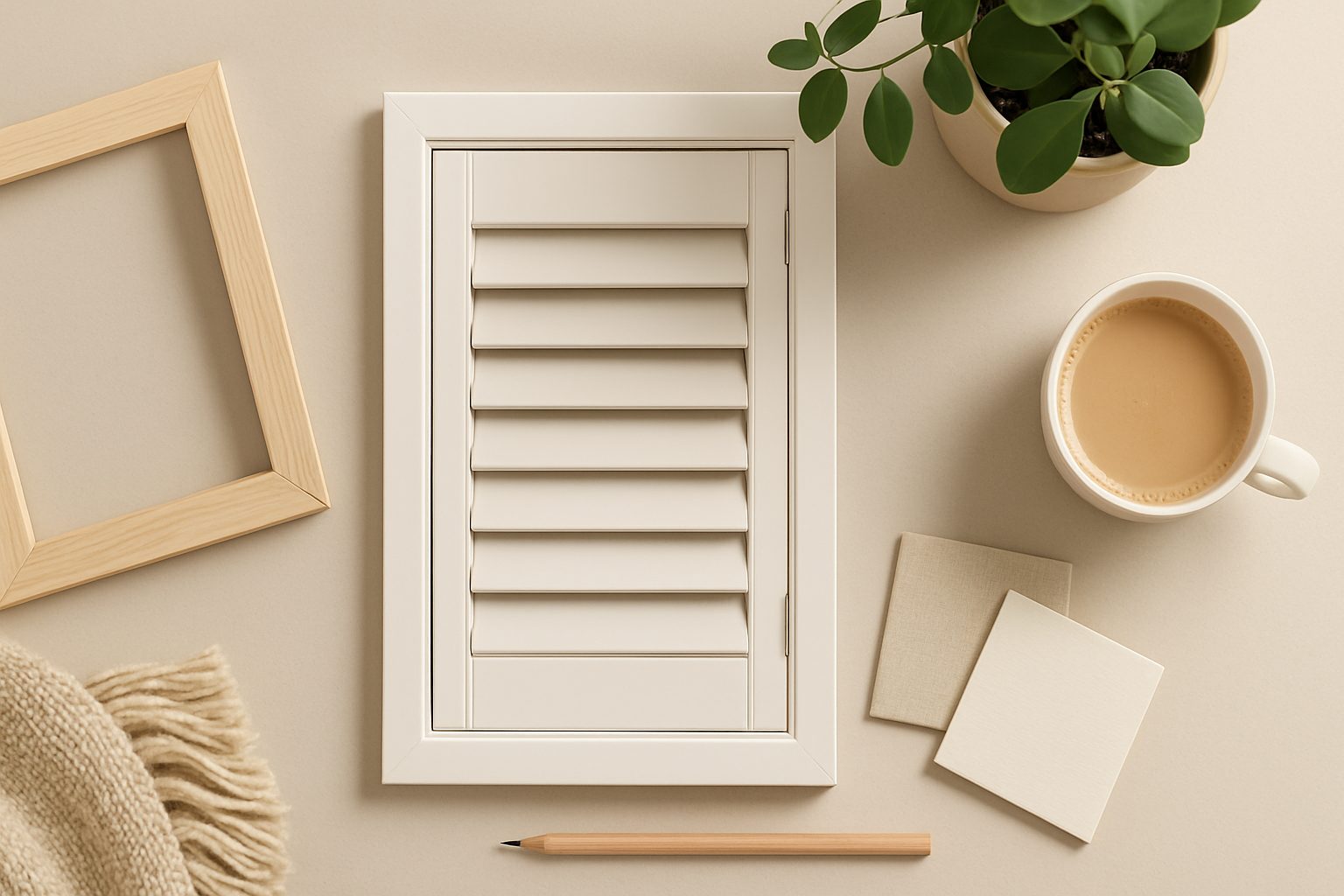
Louvred shutters (sometimes called plantation shutters with slats) have horizontal blinds built into a frame. You can tilt those slats open, closed, or anywhere between. Solid panel shutters are just that—full panels with no slats. They either open fully or close completely.
The visual impact is immediate. Louvred shutters have a contemporary, layered look that suits both modern and traditional interiors. Solid panels feel more formal and period-authentic, especially in heritage properties. Both are grown-up alternatives to curtains, but they read very differently in a room.
Light and privacy control
This is where the real difference lives.
Louvred shutters give you granular control. You can angle the slats to let light pour in while blocking the view from outside. On a bright afternoon, you can tilt them to bounce light onto the ceiling, softening glare without darkening the room. You're never stuck with an all-or-nothing choice. This flexibility is why many people choose louvred for living rooms and bedrooms where light changes throughout the day.
Solid panels, by contrast, are binary. Closed means fully closed. Yes, that gives you complete darkness and privacy, but it's also why solid shutters suit bedrooms and bathrooms more naturally—you close them and forget about them. In a living room, you'll find yourself either opening them fully (at which point they add nothing) or leaving them closed (which can feel heavy in daytime).
Practical cleaning and maintenance
Louvred shutters need more attention to dust. Those slats trap particles, and wiping them down takes real effort. A microfibre cloth works, or you can use a duster designed for venetian blinds. If you're managing fine dust from a road outside, louvred shutters will feel like extra work.
Solid panels are simpler. A quick wipe of the frame and panel faces, and you're done. If cleanliness matters to you—especially in kitchens or if you suffer from dust allergies—solid panels win.
Heat and insulation
Neither shutter type is a replacement for proper glazing, but both add some thermal benefit.
Louvred shutters create an air gap between the closed slats and the window. This helps, though the benefit depends on how tightly they fit and seal. The gaps between slats mean they're never a perfect thermal barrier.
Solid panels seal the window entirely, trapping a dead air space that provides better insulation. In winter, closing solid shutters at night genuinely reduces heat loss from a room. This advantage is measurable but modest—you're still gaining more from secondary glazing or better curtains.
Cost and value
Louvred shutters cost more to manufacture because of the mechanical slats, and you'll see that reflected in the price. Expect to pay 20–30% more for louvred compared to equivalent solid panels.
Solid panels are the economical choice if you're working to a budget. You still get the aesthetic and practical benefits of shutters without the premium.
Where each type works best
Louvred shutters suit:
- Living rooms where you want flexible light control
- South-facing windows where managing glare is important
- Rooms where you want that contemporary, tailored look
- Spaces where you're home during daylight and adjust settings regularly
Solid panels work better for:
- Bedrooms (where you typically want them fully closed overnight)
- Bathrooms (total privacy and easy cleaning matter more)
- Period properties where you want traditional aesthetics
- Homes where cleaning time is precious
- Rooms where you want the shutters fully open or fully closed, not adjusted throughout the day
Durability and longevity
Both styles last well if you choose decent materials. Hardwood and quality engineered wood hold up for 15+ years. Where louvred shutters can show wear is in the pivot mechanisms that tilt the slats—these do eventually need adjustment or repair if used heavily. Solid panels have no moving parts, so they simply don't wear in the same way.
The honest verdict
Choose louvred shutters if you want to adjust light and privacy throughout the day and don't mind occasional dusting. They're stylish and genuinely flexible.
Choose solid panels if you prefer simplicity, easier maintenance, and total darkness when closed. They're also better value and slightly better for insulation.
Neither is objectively better—it depends on how you actually live in your space. A bedroom that's dark by 9 p.m. needs different shutters than a kitchen where you're managing sunlight and views all day. Think about which rooms you're fitting and what you'll realistically do with the shutters once they're installed.
More options
- MDF Plantation Shutter Panels – Amazon UK (Amazon UK)
- PVC Waterproof Shutter Panels – Amazon UK (Amazon UK)
- DIY Interior Shutter Kit – Amazon UK (Amazon UK)
- Venetian Blinds (Comparison Alternative) – Amazon UK (Amazon UK)
- Shutter Fitting & Measuring Tools Bundle – Amazon UK (Amazon UK)