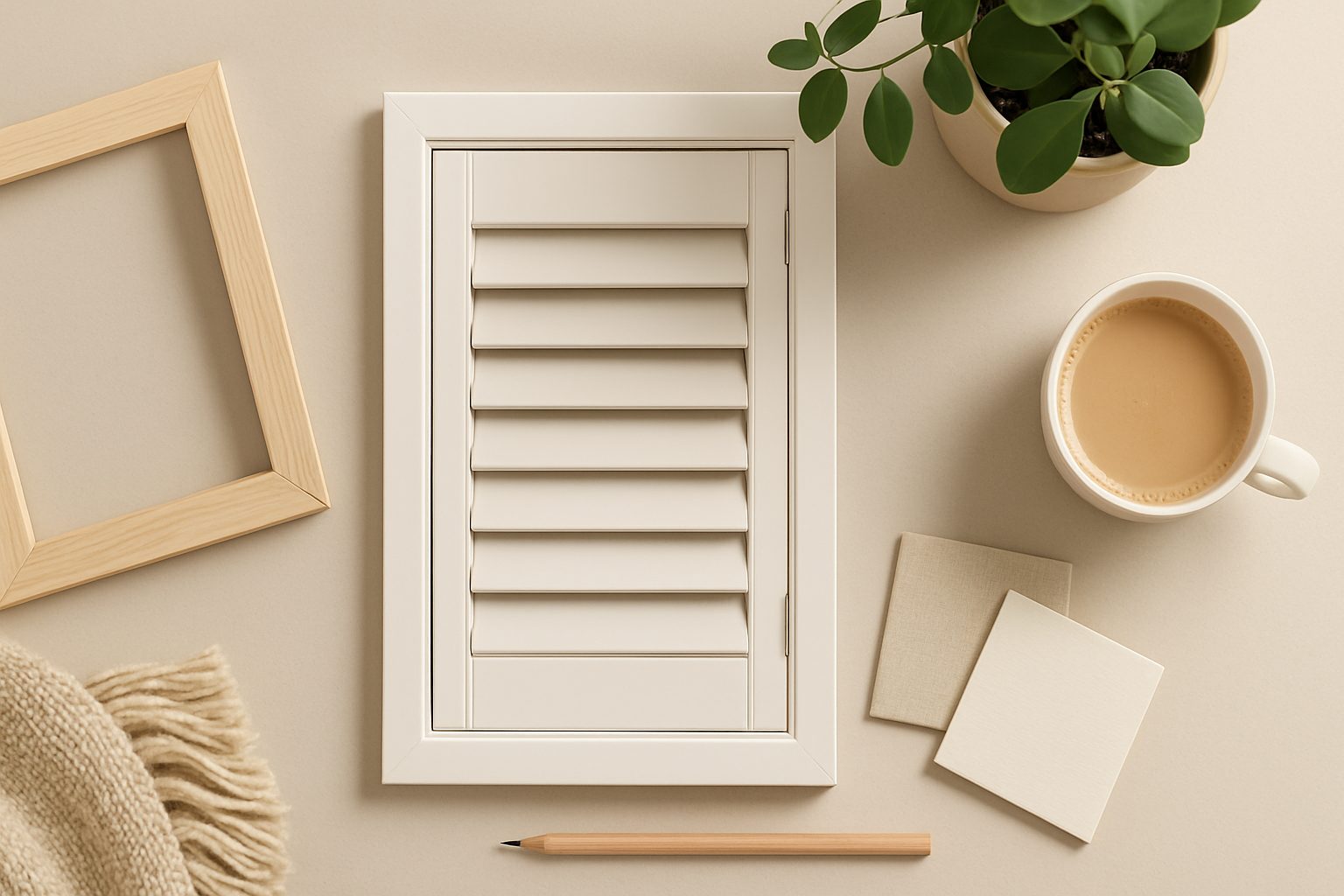
Best Shutter Colours for UK Interiors 2026: White, Off-White and Painted Options
White plantation shutters have become the default choice for UK living rooms over the last decade, and there's a practical reason beyond aesthetics: they work with the unpredictable light you actually get here. But "white" isn't simple—the undertone matters, and understanding how UK daylight interacts with your walls and furniture will help you pick a shade that doesn't look stark or dated in six months.
Why White Shutters Dominate UK Interiors
British daylight is cooler and lower-angle than Mediterranean or North American light. That means a pure, bright white can feel clinical in a north-facing room, especially in winter. The most successful white shutters in UK homes use soft, warm-leaning whites that sit between pure white and off-white. These work because they:
- Reflect available light without creating glare
- Complement both cool and warm wall colours
- Hide dust slightly better than pure white
- Age more gracefully than high-gloss finishes
The colour psychology is straightforward: white suggests calm, spaciousness and cleanliness—valuable in smaller UK properties where rooms often serve double duty. But it needs restraint. A heavily textured living room with white shutters can feel like you're living inside a gallery rather than a home.
The Off-White Spectrum: What Actually Works
Off-white is the term property stylists use when they mean "white but not quite." It's deliberate. The best off-whites for UK shutters sit in these ranges:
Warm off-whites (slight yellow/cream undertone): These work best in south or west-facing living rooms where you have consistent afternoon light. They feel settled and less institutional. Examples include shades similar to Farrow & Ball's "Pointing" or "Calluna"—not cream, but white with warmth.
Cool off-whites (slight grey undertone): Better for north-facing rooms or open-plan spaces with mixed lighting. They prevent the flatness that pure whites can create under cool LED bulbs. Think along the lines of "Shaded White" tones that large shutter manufacturers use.
Chalk-painted whites: More textured than smooth, these mimic hand-painted finishes and hide minor imperfections. They're popular right now because they look intentional rather than factory-default. The slight variation in finish gives the shutters depth.
The mistake most people make is choosing white in isolation. Hold samples against your actual wall colour and look at them at different times of day. Morning north light reads entirely differently from afternoon south light, and your existing paint colour will shift the perception of the shutters significantly.
UK Light Levels and Seasonal Shifts
British winter light is dramatically different from summer light. This matters for shutters because white shows these shifts acutely.
In December and January, pure white shutters can absorb what little available light exists, making them look slightly grey-blue in north-facing rooms. Warm off-whites perform better because the subtle yellow undertone compensates for the cool daylight. By June, the same warm off-white might feel slightly aged or yellowed when you're getting extended evening light.
Mid-tone off-whites (sometimes called "greige" when they're that indeterminate shade between grey and beige) navigate this better across the year. They're less dramatic than pure white—you lose some of the spaciousness benefit—but they're more forgiving of seasonal light variation.
Painted Options Beyond White
If pure white feels too safe, you have honest alternatives:
Soft greys: These have become more popular than they were five years ago. A light grey (not the fashionable dark charcoal that some period properties are trying) works well with white woodwork and feels contemporary without looking trendy. The drawback: they can read as cold in poorly lit rooms.
Pale blues: Common in coastal areas and increasingly in London period properties. They work genuinely well if your living room has consistent good light. In dimmer rooms, pale blue can feel slightly sad.
Warm earth tones: Taupe, warm greige, and soft terracotta occasionally appear on shutters, usually in properties trying a deliberately styled look. These date faster than white and require careful coordination with your wider colour scheme. They work only if you're committed to a particular interior direction.
The safety rule: if your living room has below-average natural light (north-facing, ground floor with limited windows, or surrounded by buildings), stick with warm off-white or the softest greige. If you have good, consistent light, you have more flexibility.
Practical Considerations: Finish and Maintenance
White shows dust, fingerprints, and marks more than darker colours. This isn't snobbery—it's a genuine maintenance consideration if you have pets, children, or live near a busy road. MDF shutter panels with a satin or silk finish hide marks better than glossy finishes and don't show dust accumulation as obviously as matte whites.
Chalk-painted finishes are more forgiving for this reason, and they also mask minor manufacturing inconsistencies that can appear as striping on perfectly smooth whites.
If you go with off-white or painted options, consistency matters more. Manufacturer inconsistency between panels is less visible with pure white. Chalk or textured finishes help hide this, but smooth off-whites or pale greys will show batch variation more obviously.
The Honest Conclusion
White plantation shutters work in most UK living rooms because they're genuinely functional: they reflect the variable light you get, they're neutral enough to adapt as your taste evolves, and they create a sense of space in compact rooms. Off-white variants are often the smarter choice for actual British light conditions. Beyond white, you're making a style decision rather than a practical one—which is fine, but it requires confidence.
The best approach is to order large samples from a couple of manufacturers, live with them for a week through different lighting conditions, and only then decide. What looks right in a showroom under shop lighting will often surprise you at home.
More options
- MDF Plantation Shutter Panels – Amazon UK (Amazon UK)
- PVC Waterproof Shutter Panels – Amazon UK (Amazon UK)
- DIY Interior Shutter Kit – Amazon UK (Amazon UK)
- Venetian Blinds (Comparison Alternative) – Amazon UK (Amazon UK)
- Shutter Fitting & Measuring Tools Bundle – Amazon UK (Amazon UK)