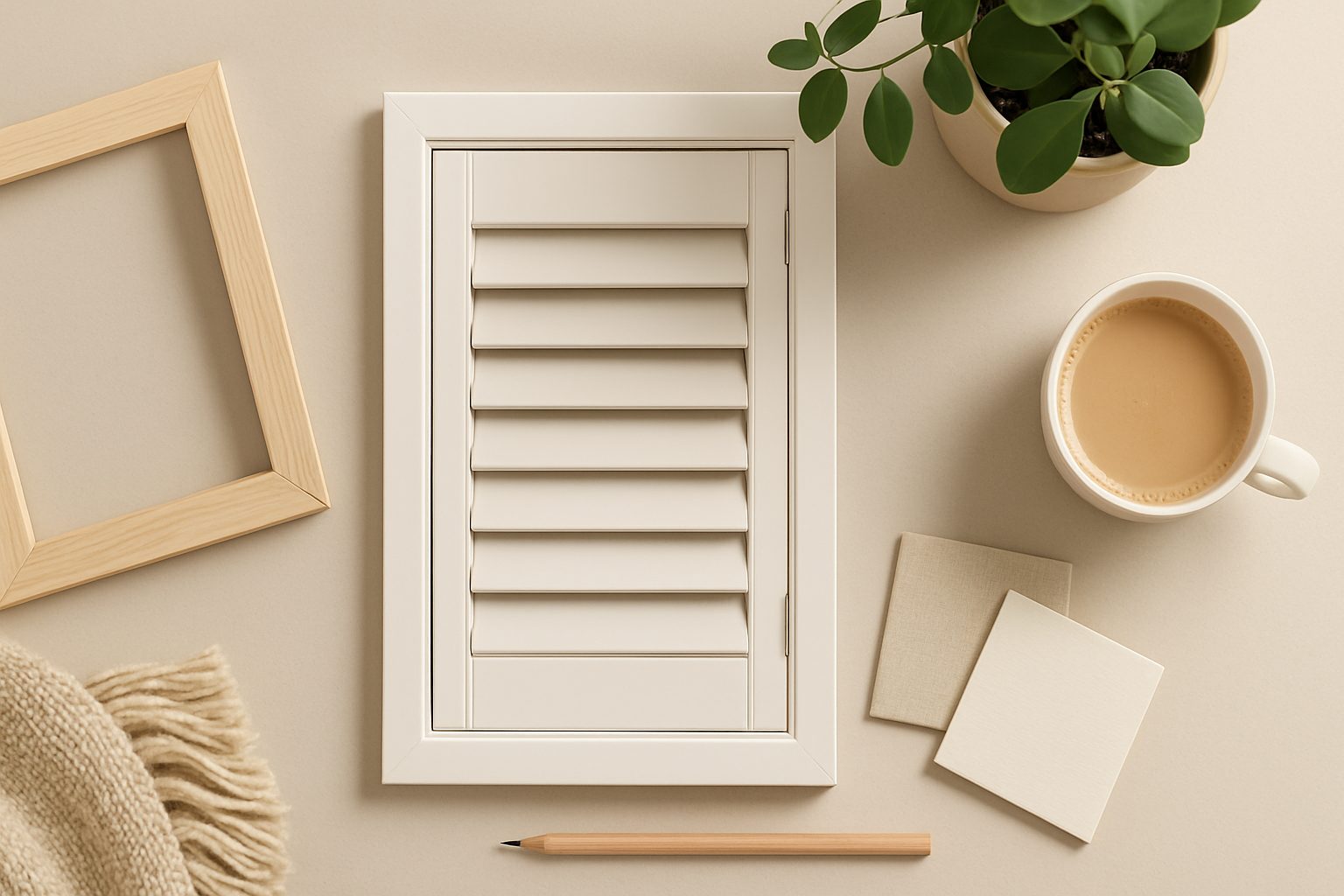
Are Plantation Shutters Worth It in the UK? Honest Pros and Cons
Plantation shutters have become increasingly popular in UK homes over the past decade, but the price tag often stops people mid-consideration. At £800–£3,000+ per window, the question isn't just "do I like them?" but "will they actually pay for themselves?" The honest answer depends on your priorities, your home's condition, and whether you're staying long enough to recoup the investment.
The Real Cost Picture
Let's start with what you'll actually pay. A medium-sized sash window costs between £400 and £800 installed, whilst a full bay window can hit £1,500. For a typical four-bedroom house, you're looking at £4,000–£8,000 for all the main living spaces. That's substantially more than roller blinds or wooden venetians, which run £50–£200 per window.
The premium buys you durability and a specific aesthetic. Unlike fabric blinds that fade, wear, and need replacing every 5–10 years, plantation shutters last 15+ years with minimal maintenance. But that longevity only matters if you value what you're paying for.
The Genuine Pros
Timeless look and home value
Plantation shutters remain in fashion in a way most window treatments don't. Estate agents and surveyors consistently note them as an upgrade that improves perceived property value. Research from the National Association of Estate Agents suggests homes with quality shutters sell 2–4 weeks faster in competitive markets, though actual price uplift varies by region (typically £500–£2,000 on a mid-range property). They work in period homes, modern conversions, and contemporary builds without looking dated.
Light control and privacy
The adjustable louver design gives you granular control you won't get from curtains or blinds. Close them halfway to block street-facing glare whilst keeping upper-room daylight. Fully closed, they're genuinely opaque—no gaps, no light leaks. This matters if you're a light-sensitive sleeper or work from home.
Thermal performance
This is where shutters justify their price for many people. Plantation shutters with properly fitted frames reduce heat loss through windows by 15–25%, according to independent testing by the British Board of Agrément. A single-glazed sash window loses heat rapidly; shutters add an insulating air layer. In winter, closing them at night measurably reduces drafts. Energy savings work out to roughly £30–£80 per window annually, depending on window size and your heating habits. Over 10 years, a large window could save £500–£800 in heating costs.
Low maintenance
A dust once a week with a soft cloth. No springs, pulleys, or cords to jam. No fabric to fade. They handle damp better than wooden blinds, making them suitable for kitchens and bathrooms.
The Honest Cons
Sight lines are reduced
Fully open shutters fold against the window frame and take up wall space. You lose some of the open, expansive feel you get with curtains. In small rooms or narrow windows, this is noticeable.
Not ideal for all window styles
French doors, Velux skylights, and very large picture windows require bespoke solutions that push costs higher. Some period properties look better with shutters that mimic historical originals, which can limit your colour and material options.
Installation is expensive and disruptive
Professional fitting takes a day or longer for a whole house. You'll need brackets installed, frames fitted precisely, and hinges adjusted. DIY is possible but unforgiving—gaps and binding shutters are common mistakes that require professional remediation.
They can feel formal
In casual, modern spaces, shutters sometimes read as too "finished" or designed. Some people find them less cosy than soft furnishings. This is subjective but worth sitting with before committing.
The Resale Question
This is the real value test. Shutters do improve a property's visual presentation and feel more substantial than temporary window treatments. Surveyors note them as a positive. However, you won't recoup the full cost through sale price in most UK markets. A reasonable expectation is recovering 40–60% of your spend, assuming they're in good condition and the buyer likes them. If you're planning to move within 3–5 years, the numbers don't work. If you're staying 10+ years, you'll have used them long enough that the time value becomes less relevant.
When They Make Sense
Plantation shutters are genuinely worth the money if you:
- Plan to stay in your home for at least 7–10 years
- Have period properties where they enhance the aesthetic
- Struggle with heat loss through large or older windows and want to avoid costly replacements
- Value privacy, light control, and durability over upfront cost
- Have a room that's difficult to dress with curtains (deep alcoves, awkward proportions)
They're harder to justify if you:
- Rent or expect to move within 5 years
- Have modern, well-insulated double-glazing already
- Prefer a softer, less formal interior style
- Have a tight budget for home improvements with clearer ROI
The Bottom Line
Plantation shutters aren't a bargain, but they're not a luxury either. They're an investment in comfort, aesthetics, and durability that pays dividends over a decade or more. The cost is real, but so is the value—you get a product that works, looks consistent, and performs better than cheaper alternatives. Whether they're worth it to you depends on your timescale and priorities, not on whether they're objectively "worth the money."
If you're seriously considering them, get actual quotes from three installers, ask about your specific window types, and factor in the 10+ year lifespan rather than comparing year-one cost to temporary alternatives.
More options
- MDF Plantation Shutter Panels – Amazon UK (Amazon UK)
- PVC Waterproof Shutter Panels – Amazon UK (Amazon UK)
- DIY Interior Shutter Kit – Amazon UK (Amazon UK)
- Venetian Blinds (Comparison Alternative) – Amazon UK (Amazon UK)
- Shutter Fitting & Measuring Tools Bundle – Amazon UK (Amazon UK)